

A CAMO audit is an assessment of whether an organisation is meeting the continuing obligations of its continuing airworthiness management approval. It examines whether the maintenance programme is current and approved, whether the compliance position on every applicable directive and bulletin is accurate, whether the technical records support both, and whether the exposition describes what the organisation actually does.
The fortnight everybody recognises
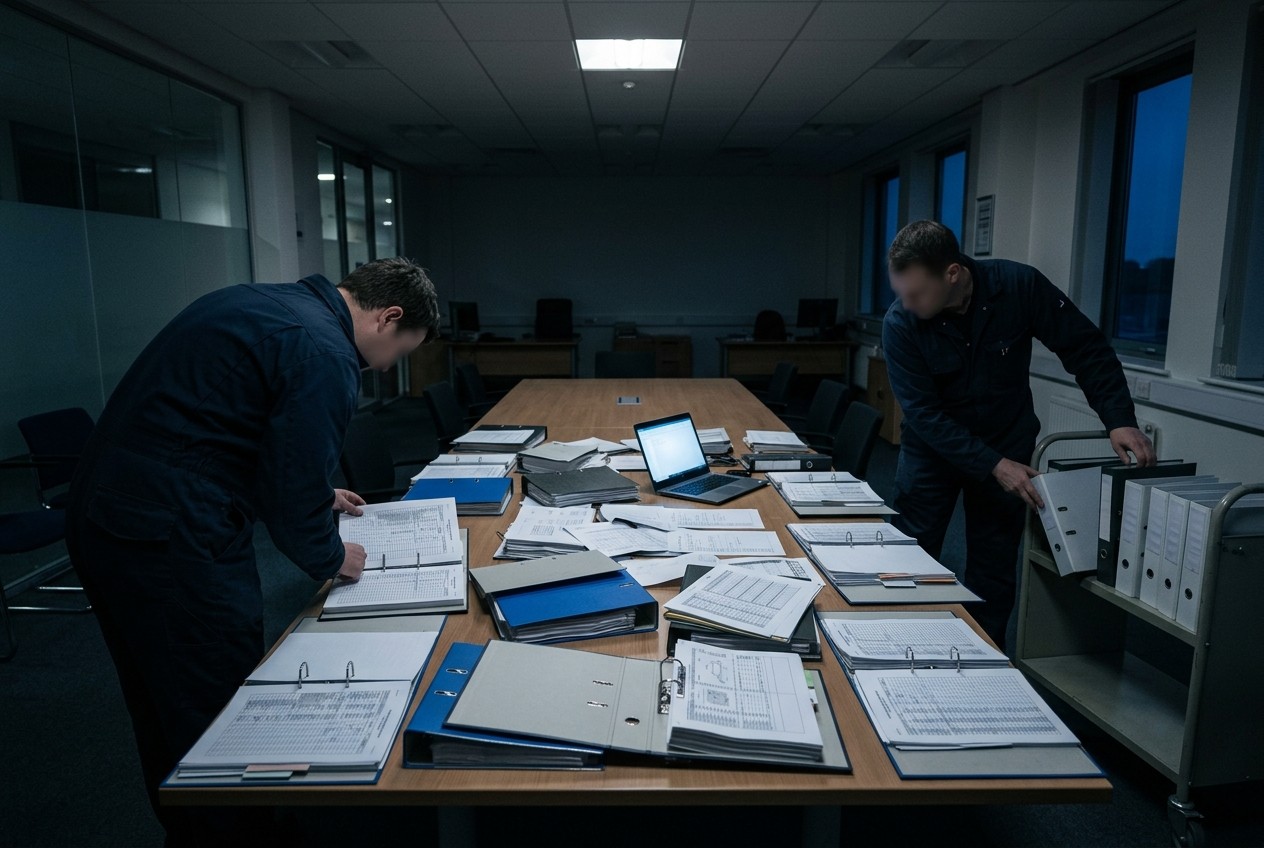
Ask anyone who has been through one and the shape is the same. Two weeks out, normal work slows and the records get pulled together. People go looking for documents. Positions are reconciled against each other. Somebody discovers a gap and spends a day closing it.
That fortnight is not preparation. It is reconstruction, and it recurs every cycle.
It is also where the risk is. Evidence assembled at speed from several sources is exactly where inconsistencies surface, and an inconsistency found by an auditor is a different conversation from one found by the organisation.
Why it happens, and it is not negligence
Four things have to be current and reconcilable with each other at all times: the maintenance programme and its approval status, the compliance position on every applicable directive and bulletin, the technical records behind both, and the exposition and procedures.
Most compliance failures are not failures of engineering judgement. They are reconciliation failures. The programme says one thing, the records say another, and the gap is found by an auditor rather than by the organisation.
That happens when the four live in separate systems maintained by different people, which is the normal arrangement when a spreadsheet handles directives and a folder structure handles documents. Nobody chose it. It accumulated. How next-gen MRO software is redefining airworthiness management covers how that shifts from periodic oversight to a continuous position.
What changes when the record and the evidence are the same object
The audit pack stops being a project and becomes a filter.
Select the aircraft. Select the period. The directives, the programme tasks, the sign-offs and the supporting documents come out together with their relationships intact, because they were never separate things that had to be matched up. That is what Part-CAMO compliance software is for.
This matters most to organisations holding approvals in more than one jurisdiction, where the same fleet has to be presented differently to different authorities from one underlying set of records.
Four questions to ask before the next cycle
Can you produce the current compliance position on any directive, for any tail, without asking anyone? If the answer involves a person, the record is in that person.
Does your programme status reconcile with your records automatically, or does somebody reconcile them? If somebody does, the gap exists between reconciliations.
When a component moves between aircraft, do its limits and directives follow it? If not, every rotation quietly ages your assessment. This depends on entries reaching the system as the work happens, which is what a digital logbook that works offline makes possible.
How long would an audit pack take right now, today, with no notice? That number is the honest measure of the system. If the honest answer is weeks, the five-year cost of that is laid out in the true cost of a legacy system.
For the evaluation criteria in full, read how to choose aircraft maintenance software.
Common questions
What does a CAMO audit examine?
A CAMO audit examines whether an organisation continues to meet the requirements of its continuing airworthiness management approval. In practice that means four things being current and consistent with each other: the approved maintenance programme, the compliance position on every applicable airworthiness directive and service bulletin, the technical records supporting both, and the exposition describing how the organisation carries out the work. Compliance is demonstrated from those records, which is why reconciliation between them matters more than any one of them being correct alone.
How far in advance should you prepare for a CAMO audit?
If preparation means assembling evidence, the honest answer is that the requirement is continuous rather than scheduled, because an auditor can ask for the airworthiness position at any moment and the organisation is expected to be able to produce it. The two-week scramble common in the industry is a symptom of records living in several systems rather than a necessary stage. Where the record and the evidence are the same object, producing an audit pack is a filtering operation rather than a project, and the preparation window stops being meaningful.